



Opinion: The real gatekeeper of South Africa's energy future – the grid

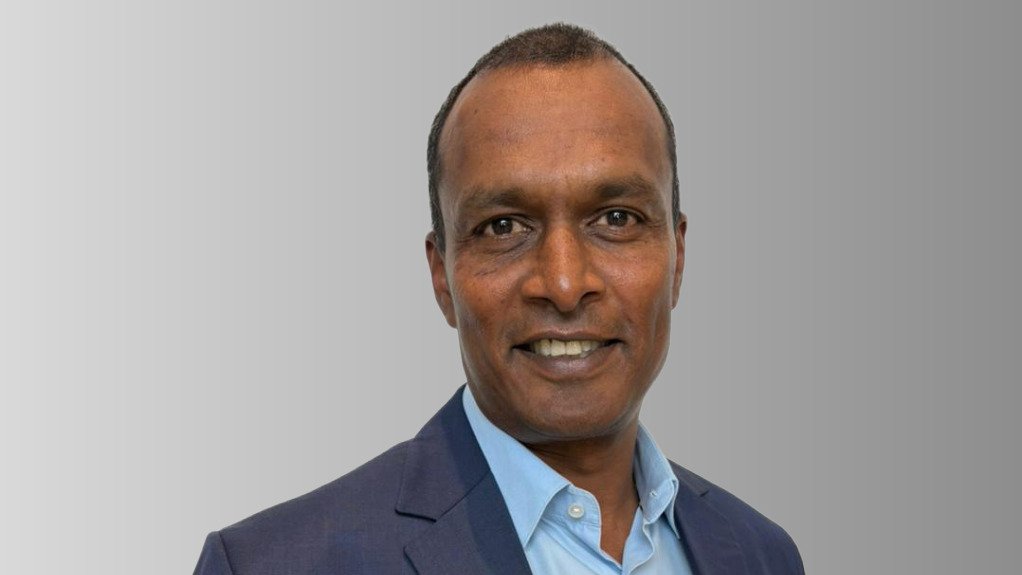



In this article, ENGIE South Africa renewables and batteries MD Sanjeev Mungroo writes that the success of South Africa's electricity reform depends on the expansion of the transmission grid, as it is central to ensuring a competitive electricity market.
In South Africa, the electricity reform is entering a decisive phase. Legislation has evolved and several institutions are adapting in step with it. A wholesale market framework is also taking shape. However, reform will ultimately be judged on transmission capacity.
We can procure generation, we can unlock private capital and we can even announce preferred bidders. At the heart of it, projects need reliable grid access - or a grid that grows as quickly as our generation ambitions. What’s clear is that everything comes down to the point of connection.
Regardless of market or geography, transmission is not a technical footnote to reform. Public- and private-sector leaders need to recognise that transmission is a fundamental principle for competitive markets to function.
Globally, unbundling generation and transmission has been a prerequisite for competition. South Africa’s strengthening of the National Transmission Company South Africa (NTCSA) and the introduction of Independent Transmission Projects (ITP) align with that trajectory. Structurally, the direction is sound.
THIS POINT IN TIME MATTERS
The real test, however, is speed in execution and a true understanding of the risks.
Transmission infrastructure is capital-intensive and slow-moving. In Brazil and Chile, where ENGIE has developed and operated large-scale transmission corridors, projects typically take three to four years from award to energisation. Permitting, servitudes, environmental approvals, financing and construction sequencing are complex and interdependent. South Africa should assume similar timelines unless processes are deliberately streamlined.
This timing consideration is important, as investment decisions are made now rather than several years ahead.
In practice, grid constraints are already influencing market dynamics. While many renewable projects may be fully permitted and financed, access to firm connection capacity can remain limited. Where congestion risks are perceived to be higher, investors tend to factor in potential curtailment. Similarly, uncertainty around connection timelines can complicate financial close, and unclear risk allocation can translate into a higher cost of capital.
THE BUILDING BLOCKS FOR INVESTMENT
We know all too well that capital does not wait indefinitely for clarity.
For the ITP programme to attract investment at scale, three elements are critical:
-Revenue certainty. Investors need clearly defined, availability-based revenue frameworks with transparent tariff methodologies and predictable settlement mechanisms.
-Risk allocation discipline. Curtailment risk, force majeure treatment, construction interface risk and performance obligations must be clearly allocated. Ambiguity in these areas directly leads to higher pricing.
-Bankable grid access sequencing. If transmission and generation planning advance on parallel but uncoordinated tracks, congestion will persist regardless of procurement volumes.
Policy certainty reduces regulatory ambiguity. It does not eliminate engineering or construction risk, but it prevents risks from being compounded by institutional uncertainty. This distinction is essential.
ALIGNMENT BEFORE ACCELERATION
It is also important to take a realistic view of what transmission reform can achieve in the short term. While reforms are essential, they will not translate into immediate system relief. Physical infrastructure requires time to plan, permit and build. Experience shows that accelerating delivery by reducing upfront diligence or limiting community engagement may ease early stages, but often leads to challenges later in the project lifecycle. Maintaining discipline is therefore as important as maintaining momentum.
Progress can, however, be meaningfully accelerated through stronger alignment.
Market rules under the emerging wholesale electricity framework need to reflect the physical realities of the power system. Transmission investment programmes should anticipate where renewable generation is most likely to develop, rather than responding only once congestion has already emerged.
In this sense, transmission is not solely about physical assets such as towers and substations; it is also about building market confidence.
When investors see that grid expansion is adequately funded, clearly sequenced and governed with transparency, they are more inclined to commit capital to new generation. When developers have clarity on congestion exposure and curtailment risk, they can structure projects and financing more effectively. Similarly, when traders and large customers have visibility on network capacity and access rules, participation in competitive bilateral markets becomes more attractive.
Greater confidence ultimately supports a lower cost of capital, which in turn contributes to lower tariffs. This is how transmission reform translates into tangible benefits for consumers.
BUILDING ON PROGRESS
South Africa has made tangible progress in stabilising generation capacity and advancing market reform. There is clear institutional engagement, a meaningful investment opportunity, and a strong base of engineering expertise supported by access to developed capital markets.
At the same time, attracting long‑term infrastructure investment requires more than ambition alone. The next phase of transmission development will depend on consistent and disciplined execution.
Where transmission reform provides predictable revenue frameworks, clear risk allocation and coordinated grid expansion, market participants are likely to respond positively. Conversely, if these elements are not sufficiently in place, network congestion may continue to constrain market development, even where significant generation capacity has been procured.
Ultimately, the effectiveness of a competitive electricity market is reflected in the delivery of actual grid connections, with transmission playing a central role in enabling this outcome.
Article Enquiry
Email Article
Save Article
Feedback
To advertise email advertising@creamermedia.co.za or click here
Research Reports

Projects


Latest Multimedia


Latest News

Showroom


Leading condition monitoring specialists, WearCheck, help boost machinery lifespan and reduce catastrophic component failure through the scientific...
VISIT SHOWROOM



Announcements
What's On
Subscribe to improve your user experience...
Option 1 (equivalent of R125 a month):
Receive a weekly copy of Creamer Media's Engineering News & Mining Weekly magazine
(print copy for those in South Africa and e-magazine for those outside of South Africa)
Receive daily email newsletters
Access to full search results
Access archive of magazine back copies
Access to Projects in Progress
Access to ONE Research Report of your choice in PDF format
Option 2 (equivalent of R375 a month):
All benefits from Option 1
PLUS
Access to Creamer Media's Research Channel Africa for ALL Research Reports, in PDF format, on various industrial and mining sectors
including Electricity; Water; Energy Transition; Hydrogen; Roads, Rail and Ports; Coal; Gold; Platinum; Battery Metals; etc.
Already a subscriber?
Forgotten your password?
Receive weekly copy of Creamer Media's Engineering News & Mining Weekly magazine (print copy for those in South Africa and e-magazine for those outside of South Africa)
➕
Recieve daily email newsletters
➕
Access to full search results
➕
Access archive of magazine back copies
➕
Access to Projects in Progress
➕
Access to ONE Research Report of your choice in PDF format
RESEARCH CHANNEL AFRICA
R4500 (equivalent of R375 a month)
SUBSCRIBEAll benefits from Option 1
➕
Access to Creamer Media's Research Channel Africa for ALL Research Reports on various industrial and mining sectors, in PDF format, including on:
Electricity
➕
Water
➕
Energy Transition
➕
Hydrogen
➕
Roads, Rail and Ports
➕
Coal
➕
Gold
➕
Platinum
➕
Battery Metals
➕
etc.
Receive all benefits from Option 1 or Option 2 delivered to numerous people at your company
➕
Multiple User names and Passwords for simultaneous log-ins
➕
Intranet integration access to all in your organisation
